Differences Between Ancient and Modern Olympic Games?
Explore the key differences between the Ancient Olympic Games in Greece and today's modern Olympics. From nude athletes and religious rituals to global participation and diverse sports, discover how these events evolved over centuries. A fascinating look at history and tradition.
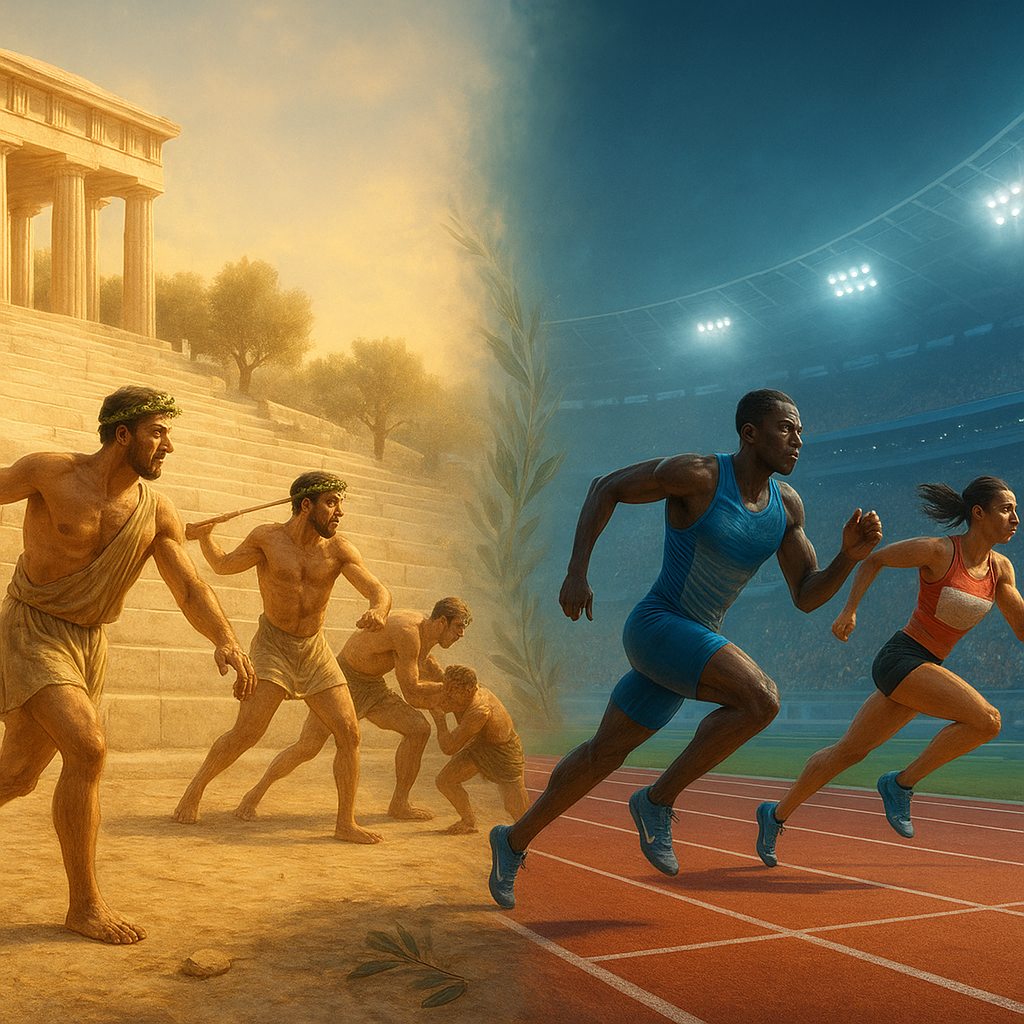
The Ancient Olympic Games, held in Olympia, Greece from 776 BCE to 393 CE, were a cornerstone of Greek culture dedicated to Zeus. In contrast, the modern Olympic Games, revived in 1896 by Pierre de Coubertin, bring together athletes from over 200 nations every four years. While both embody athletic excellence and the Olympic spirit, they differ significantly in participants, events, organization, and cultural role.
Historical Origins and Frequency
The Ancient Olympics originated as a religious festival honoring Zeus, starting in 776 BCE and continuing for nearly 1,200 years until banned by Roman Emperor Theodosius I. Competitions occurred every four years in a single summer event known as an Olympiad, which also served as a calendar unit in ancient Greece. Modern Olympics, inspired by the ancients, began in Athens in 1896 under the International Olympic Committee (IOC) and now include separate Summer and Winter Games every two years alternately.
Ancient: One festival every 4 years, lasting 5 days in Olympia.
Modern: Summer Games (e.g., Paris 2024) and Winter Games (e.g., Milano Cortina 2026), spanning 2 weeks with global hosting.
Participants and Eligibility Rules
Only freeborn Greek men could compete in the ancient games, performing nude to symbolize purity and equality before the gods; women were barred from competing and even spectating, except for priestesses. Slaves and foreigners were excluded. Today, the modern Olympics welcome athletes of all genders, nationalities, and backgrounds, with women's events introduced from the start in 1900 and now comprising nearly half of participants.
Ancient example: Victor Milo of Croton, a wrestler who won six times.
Modern example: Athletes like Usain Bolt (Jamaica) and Simone Biles (USA) represent global diversity.
Key shift: From amateur Greek males to professional athletes from 206 nations.
Events and Types of Competitions
Ancient events focused on combat and strength sports like stadion (short sprint), wrestling, boxing, pankration (mixed combat), chariot racing, and the pentathlon (five events: running, jumping, discus, javelin, wrestling). There were no team sports or winter disciplines. Modern Games feature over 300 events across 30+ sports, including swimming, gymnastics, soccer, basketball, and winter pursuits like skiing and ice hockey, emphasizing speed, precision, and teamwork.
Ancient: Horse racing at Hippodrome, equestrian events by owners.
Modern: Team relays, synchronized swimming, and Paralympics integration.
Evolution: Added sports like skateboarding in Tokyo 2020.
Cultural, Religious, and Organizational Aspects
The ancient Games were deeply religious, featuring sacrifices, oaths to Zeus, and a sacred truce halting wars across Greece. Prizes were olive wreaths, with glory as the true reward. Ruled by local priests and judges, they drew 40,000 spectators. Modern Olympics promote peace via the Olympic Truce, but are secular, commercially driven by sponsors and TV rights, governed by the IOC with medals (gold, silver, bronze) and massive audiences exceeding 3 billion viewers.
Ancient: No commercialization; winners gained timē (honor).
Modern: Doping controls, anti-discrimination policies, and youth-focused programs like YOG.
Legacy and Global Impact
Ancient Olympics unified Greek city-states culturally but remained regional. Their revival has made the modern Games a symbol of international unity, fostering diplomacy and inspiring billions. Despite differences, both celebrate human potential, endurance, and fair play.