Hand: Literal Anatomy and Metaphorical Meanings
Discover the hand's literal anatomy as a vital body part for grasping and dexterity, alongside its rich metaphorical roles symbolizing power, aid, skill, and connection across cultures, language, and art. Explore real-world examples and symbolism.
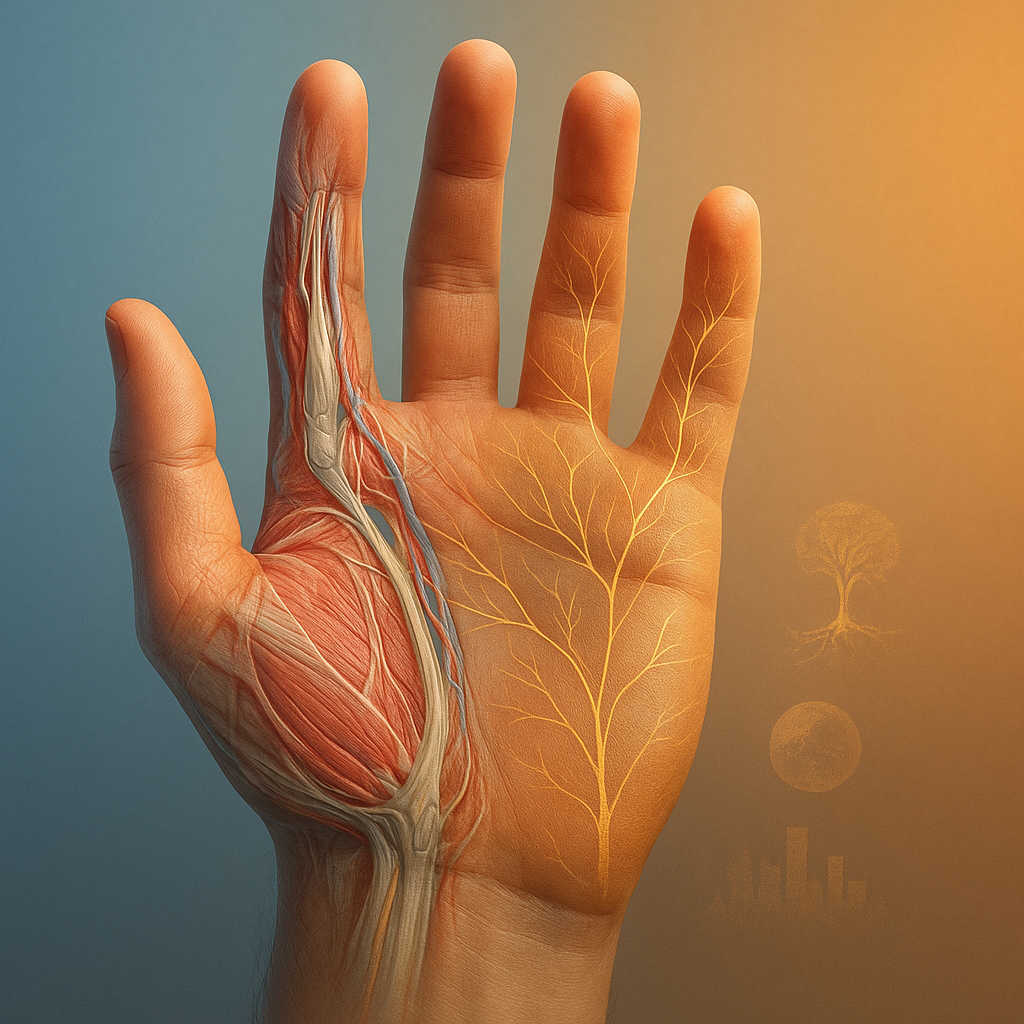
The hand is a remarkable anatomical structure essential for human interaction with the world, enabling precise manipulation of objects and expressive gestures. Beyond its physical form, the hand carries profound metaphorical meanings, representing power, assistance, skill, and connection in language, culture, and art. This dual role makes it one of the most symbolically rich body parts.
Literal Anatomy and Functions of the Hand
Anatomically, the hand consists of 27 bones, including the carpals in the wrist, metacarpals in the palm, and phalanges in the fingers. Muscles, tendons, and nerves provide the dexterity needed for fine motor skills. This structure allows humans to grasp tools, write, and perform intricate tasks like surgery or playing musical instruments.
Opposable thumb: Enables pinching and holding objects securely, a key evolutionary advantage.
Palm and fingers: Facilitate sensation through touch receptors, aiding in texture identification.
Wrist flexibility: Supports rotation and bending for a wide range of motions.
In daily life, hands are indispensable for activities such as eating, driving, and personal hygiene. Evolutionary developments, like those in early hominids, transformed hands from locomotion aids into tools for survival, sparking human innovation.
Evolutionary and Practical Roles
The hand's evolution from arboreal climbing to tool-making marked a pivotal shift around 2.5 million years ago with Homo habilis. Today, it supports professions from artisans crafting pottery to surgeons performing life-saving operations, underscoring its literal utility.
Metaphorical and Symbolic Meanings
Metaphorically, the hand embodies abstract concepts like authority and benevolence. Phrases such as "lending a hand" signify help, while "iron fist" or "heavy hand" denote strict control. In religion and mythology, hands symbolize divine intervention, as in Michelangelo's Creation of Adam where God's hand reaches toward humanity.
Helping hand: Represents support, seen in charity logos with outstretched palms.
Upper hand: Means advantage in negotiations or competitions.
Hand in marriage: Symbolizes partnership, originating from ancient betrothal customs.
Culturally, hand gestures vary: the thumbs-up signals approval in Western societies, while in some Asian cultures, it may offend. The evil eye talisman features a hand warding off misfortune.
Hands in Art, Literature, and Modern Culture
In literature, hands convey emotion—Shakespeare's Macbeth references "damned spot" on Lady Macbeth's hands, symbolizing guilt. Artists like Salvador Dalí surrealistically elongate hands to evoke dreamlike power. Modern icons include the raised fist for solidarity in protests and emoji hands for digital expression.
Victory sign: Churchill's V-for-victory hand gesture during WWII.
Prayer hands: Universal symbol of supplication across faiths.
High-five: Celebrates achievement in sports and casual settings.
These examples highlight how the hand transcends its physicality, embedding deep cultural narratives.