What Are Niagara Falls? Natural Wonder Explained
Explore Niagara Falls, one of the world's most spectacular waterfalls on the Niagara River between the USA and Canada. Learn about its geography, history, tourism, and environmental significance in this comprehensive guide.
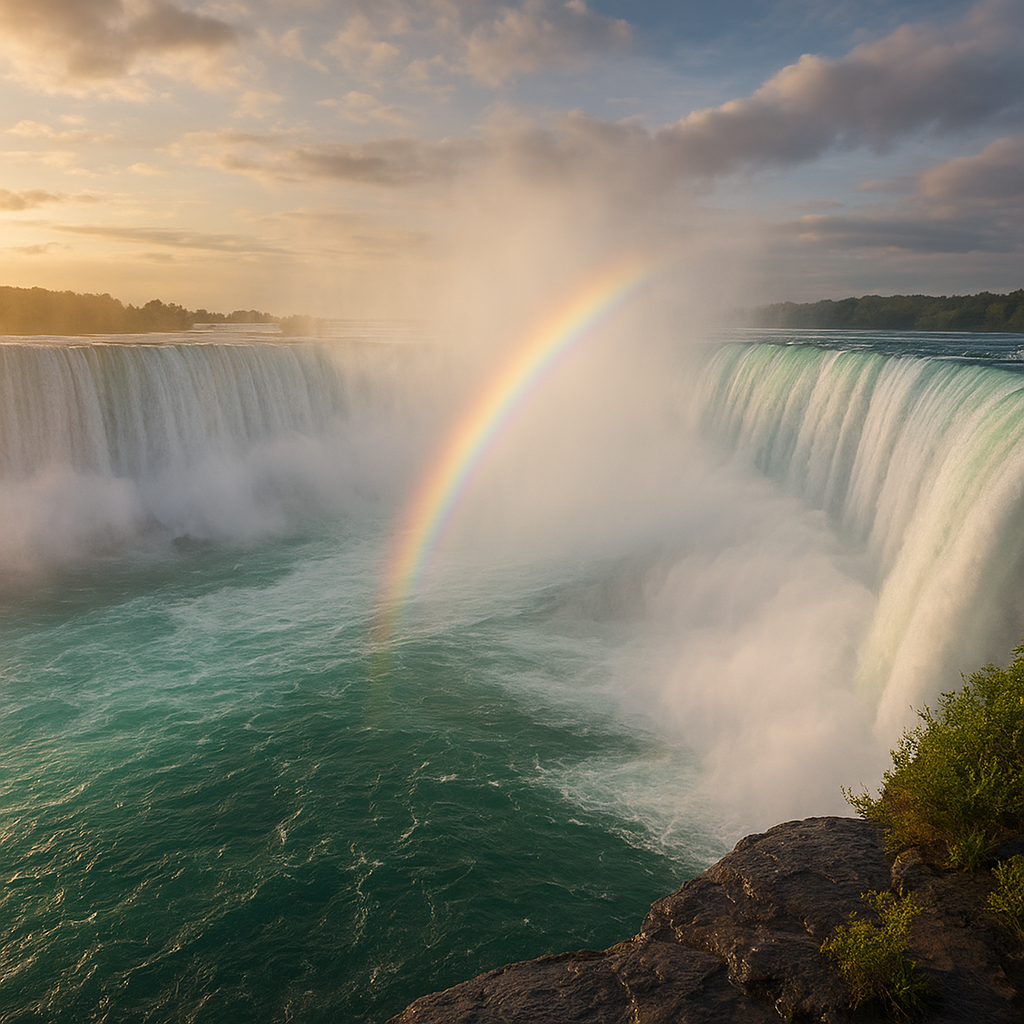
Niagara Falls, often called Niagara Şelaleleri in Turkish, is a group of three majestic waterfalls located on the Niagara River, which forms part of the border between Ontario, Canada, and New York, USA. Known as one of the most famous natural wonders, it attracts millions of visitors annually with its thunderous roar and breathtaking beauty. The falls consist of the massive Horseshoe Falls, the American Falls, and the smaller Bridal Veil Falls.
Geography and Physical Features
Niagara Falls spans approximately 1,060 meters (3,500 feet) in total width, with Horseshoe Falls being the largest at 790 meters wide and 54 meters high. The American Falls measures 320 meters wide and 21 meters high, while Bridal Veil Falls is the smallest at 17 meters wide and 56 meters high. The sheer volume of water—over 2,800 cubic meters per second—creates a constant mist and frequent rainbows, making it a photographer's paradise.
Water Source: Fed by the Great Lakes, primarily Lake Erie.
Depth of Drop: Water plunges into a gorge up to 99 meters deep.
Seasonal Variations: Flow reduces in winter for power generation but peaks in spring thaw.
Geological Formation and History
Formed around 12,000 years ago at the end of the last Ice Age, Niagara Falls resulted from glacial erosion as meltwater carved through the Niagara Escarpment. Over millennia, the falls have receded upstream by about 11 kilometers due to constant erosion. Indigenous peoples, including the Haudenosaunee and Anishinaabe, inhabited the area for thousands of years before European explorers like Samuel de Champlain documented it in the 1600s.
In the 19th century, daredevils like Annie Edson Taylor, who went over in a barrel in 1901, brought fame. Today, it's a symbol of natural power harnessed for hydroelectricity, supplying energy to both nations since the early 1900s.
Tourism and Attractions
Niagara Falls draws over 12 million tourists yearly, offering experiences like the Maid of the Mist boat tour, which gets visitors close to the base amid swirling mist. Viewing platforms, helicopter rides, and the Niagara SkyWheel provide panoramic vistas. On the Canadian side, Clifton Hill features entertainment, while the U.S. side offers Niagara Falls State Park, the oldest in America.
- Journey Behind the Falls: Tunnels lead behind Horseshoe Falls for an immersive view.
- Cave of the Winds: Walkboards to the base of Bridal Veil Falls.
- Niagara Falls Illuminations: Nightly light shows in multiple colors.
Environmental Impact and Conservation
While generating clean energy, water diversions for power plants reduce flow by 50-75% at times, protected by the 1950 Niagara Treaty. Conservation efforts focus on invasive species control and habitat restoration. The falls support diverse wildlife, including birds and fish in the Niagara River ecosystem.
Challenges: Pollution from urban runoff and erosion threats.
Initiatives: Binational monitoring and eco-tourism promotion.
Fun Facts and Real-World Examples
Niagara Falls has inspired movies like Niagara (1953) starring Marilyn Monroe and hosted events like the 2016 illuminations for Queen Elizabeth II's 90th birthday. Compared to other falls, it's not the tallest but ranks third globally by flow rate after Itaipu Dam and Guaíra Falls.
Record: Tightrope walker Jean-François Blondin crossed in 1859.
Power Output: Niagara plants produce 2.5 million kilowatts.
Weddings: Over 100 couples marry annually at the falls.