What is Mount Everest? Height, Location & Facts
Discover Mount Everest, the world's highest mountain at 8,848.86 meters. Learn about its location in the Himalayas, climbing history, challenges, and environmental impact in this comprehensive guide.
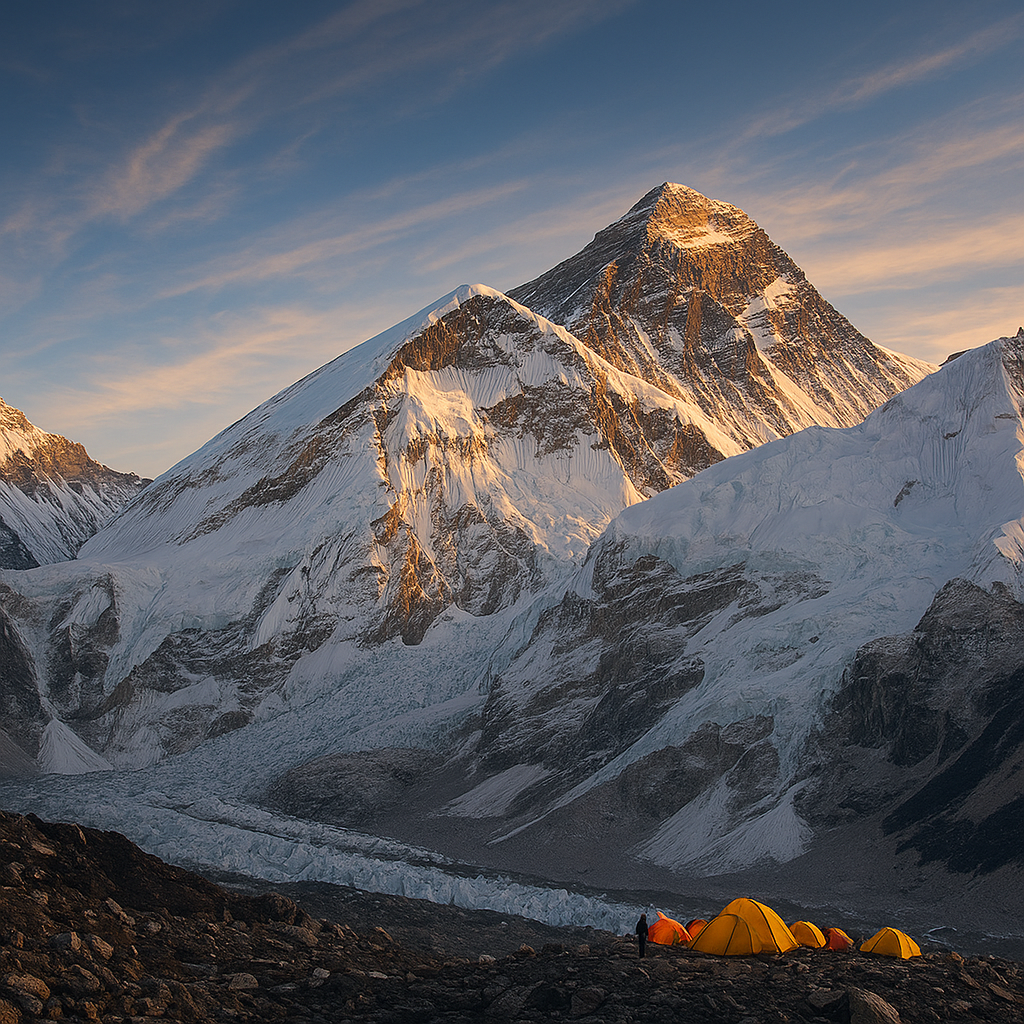
Mount Everest, known as the world's highest mountain, stands at an elevation of 8,848.86 meters (29,031.7 feet) above sea level. Located in the Mahalangur Himal sub-range of the Himalayas on the border between Nepal and Tibet, it is one of the most iconic and challenging peaks for mountaineers. Named after Sir George Everest, the former Surveyor General of India, it holds immense cultural and geological significance.
Geography and Geological Formation
Mount Everest forms part of the Himalayan mountain range, created by the collision of the Indian tectonic plate with the Eurasian plate millions of years ago. This ongoing tectonic activity causes the peak to grow by about 4 mm annually. The mountain's Khumbu Icefall and Western Cwm are notable features that climbers must navigate.
Base Camp: South side in Nepal at 5,364 meters; North side in Tibet at 5,150 meters.
Summit Conditions: Temperatures drop to -60°C with winds exceeding 175 km/h.
Nearby Peaks: Includes Lhotse (8,516 m) and Nuptse (7,861 m).
History of Discovery and First Ascents
The mountain was identified as the highest in the world during the Great Trigonometrical Survey of India in 1856. Locally, it is called Chomolungma in Tibetan ("Goddess Mother of the World") and Sagarmatha in Nepali ("Forehead in the Sky"). The first confirmed summit was achieved on May 29, 1953, by Edmund Hillary (New Zealand) and Tenzing Norgay (Nepal) via the Southeast Ridge.
1953: First ascent by Hillary and Norgay.
1960: First from North Ridge by Chinese team.
1975: First woman, Junko Tabei (Japan).
Over 6,000 people have summited since, with commercial expeditions booming since the 1990s.
Climbing Challenges and Records
Climbing Everest requires acclimatization to avoid altitude sickness, navigating treacherous icefalls, and enduring the "death zone" above 8,000 meters where oxygen is scarce. Permits cost around $11,000 from Nepal. Notable records include Kami Rita Sherpa with 28 summits and the fastest ascent in 8 hours 10 minutes by Kilian Jornet in 2017.
Deadliest Year: 1996 with 15 deaths due to storms.
Oldest Climber: Yuichiro Miura at 80 years in 2013.
Youngest: Jordan Romero at 13 years in 2010.
Environmental and Cultural Impact
Tourism has led to waste accumulation, with over 200 bodies still on the slopes. Cleanup efforts by groups like the Sagarmatha Pollution Control Committee remove tons of trash yearly. Culturally, Everest is sacred to Sherpas, who perform rituals before climbs. Climate change is melting glaciers, increasing avalanche risks.
Conclusion: The Enduring Allure of Everest
Mount Everest remains a symbol of human endurance and nature's majesty. While commercialization raises concerns, it continues to inspire adventurers worldwide. Aspiring climbers should prioritize safety, training, and respect for the environment.