What is Renaissance Art? Origins and Key Features
Discover Renaissance art: a revolutionary period from the 14th to 17th century emphasizing realism, humanism, and classical revival. Explore iconic artists like Leonardo da Vinci and Michelangelo, their masterpieces, and lasting influence on Western art.
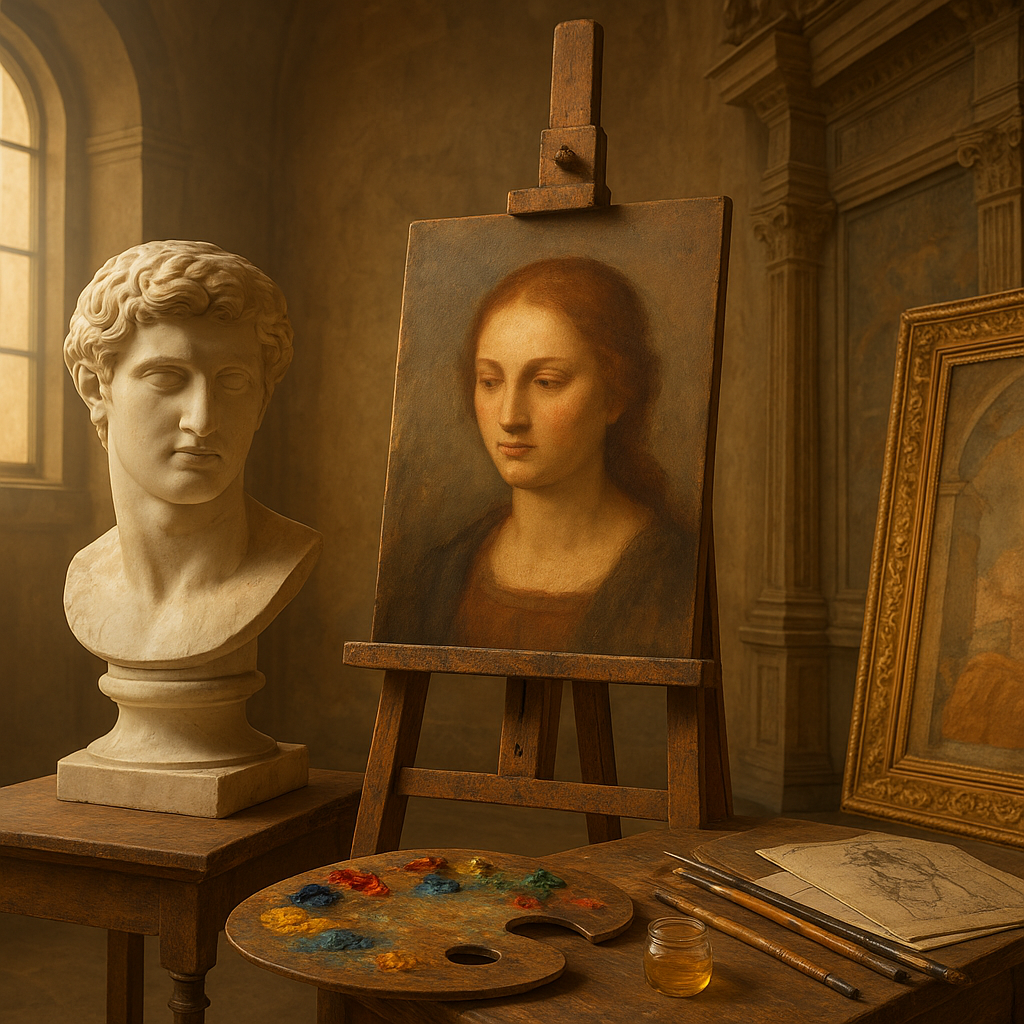
Renaissance art refers to the transformative artistic movement that flourished in Europe from the 14th to the 17th century, marking a rebirth of classical Greek and Roman ideals. Centered initially in Italy, it emphasized humanism, realism, and scientific precision, shifting from the medieval focus on religion to celebrate individual potential and the natural world. This era produced timeless masterpieces that continue to inspire artists today.
Origins and Historical Context
Renaissance art emerged in Florence, Italy, during the late 14th century amid economic prosperity from trade and banking. Patrons like the Medici family funded artists, fostering innovation. The term 'Renaissance,' meaning 'rebirth,' was coined by 19th-century historian Jacob Burckhardt to describe the revival of antiquity after the Middle Ages. Key events, such as the fall of Constantinople in 1453, brought Greek scholars and texts to Italy, fueling classical rediscovery.
Key Characteristics of Renaissance Art
Central to Renaissance art was linear perspective, invented by Filippo Brunelleschi, allowing realistic depth in paintings. Artists mastered anatomical accuracy through dissection studies, portraying human forms with lifelike emotion and movement. Chiaroscuro (light-dark contrast) and sfumato (soft blending) added dimension and subtlety.
Humanism: Figures shown as noble and capable, reflecting individual achievement.
Balance and Proportion: Inspired by Vitruvius, emphasizing harmony like Leonardo's Vitruvian Man.
Naturalism: Detailed landscapes and textures, moving beyond flat medieval icons.
Famous Artists and Masterpieces
Leonardo da Vinci epitomized the Renaissance Man with works like the Mona Lisa (1503-1506), famous for its enigmatic smile and atmospheric perspective, and The Last Supper (1495-1498), showcasing emotional depth. Michelangelo's Sistine Chapel ceiling (1508-1512) features dynamic figures like The Creation of Adam, blending sculpture and painting. Raphael's School of Athens (1509-1511) gathers philosophers in perfect perspective, symbolizing intellectual rebirth.
Donatello's David (1408-1409): First freestanding nude since antiquity, bronze sculpture of youthful heroism.
Titian's Venus of Urbino (1534): Bold use of color and sensuality in Venetian Renaissance style.
Spread Across Europe and Legacy
From Italy, Renaissance ideas spread to Northern Europe via artists like Albrecht Dürer, who blended German detail with Italian perspective in engravings. In France, it influenced the Fontainebleau School. The movement laid foundations for Baroque and modern art, promoting techniques still taught today. Museums worldwide, like the Uffizi Gallery and Louvre, preserve these treasures.
Conclusion: Enduring Impact
Renaissance art revolutionized visual expression, bridging medieval and modern eras through innovation and beauty. Its focus on humanity and realism remains relevant, encouraging viewers to appreciate art's power to reflect life's complexities. Explore replicas or virtual tours to experience this golden age firsthand.