What Is the Eye? Anatomy, Functions & Symbolism
Discover the human eye's anatomy, how vision works, animal variations, and its rich symbolism in culture. Explore this vital organ's structure, functions, and metaphorical meanings in an engaging guide.
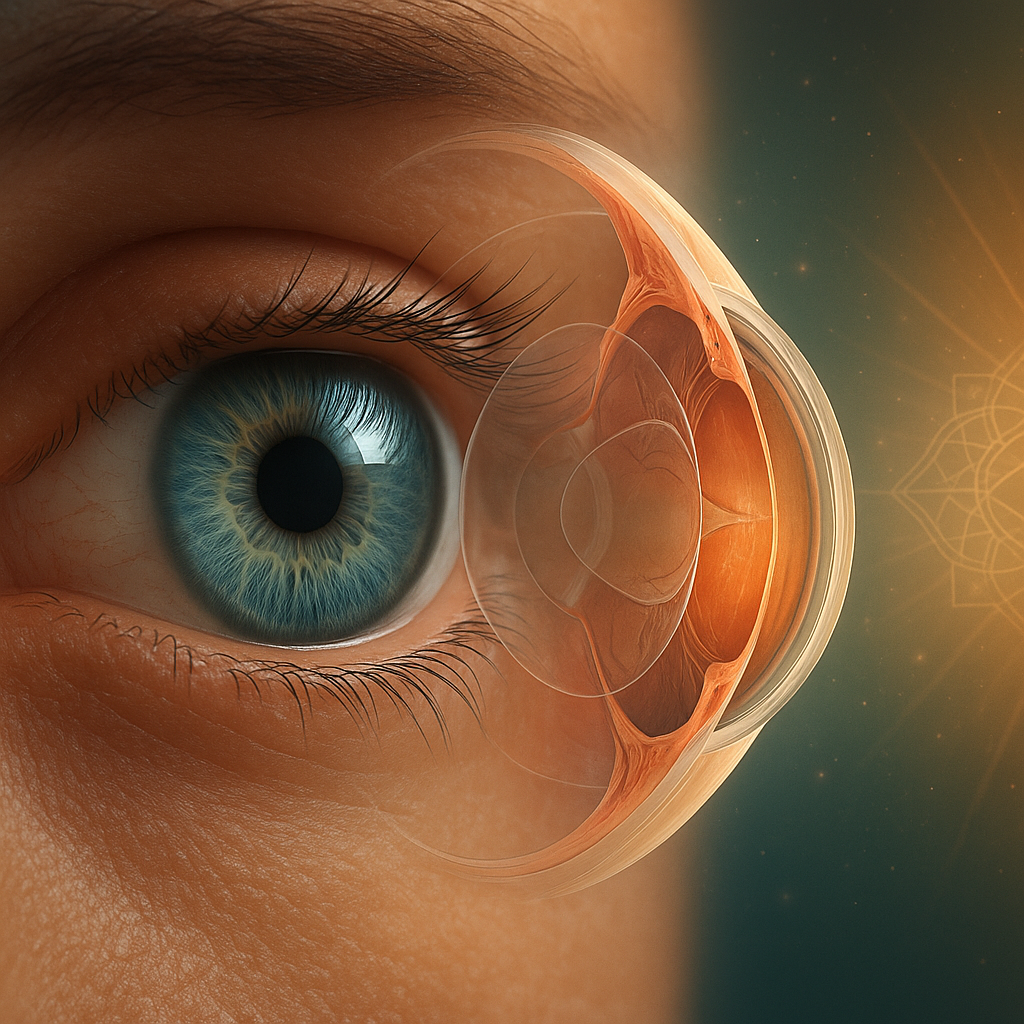
The human eye is a complex and remarkable organ that allows us to perceive light, color, and shape, forming the basis of our vision. Composed of intricate parts working in harmony, it transforms incoming light into neural signals sent to the brain. Beyond biology, the eye inspires rich symbolism across cultures, representing watchfulness, insight, and protection.
Anatomy of the Human Eye
The eye consists of several key structures that collaborate to focus light and produce clear images. The cornea, the clear front surface, bends light entering the eye. Behind it lies the iris, a colored muscle that controls the size of the pupil to regulate light intake.
Lens: A flexible structure that fine-tunes focus, thickening or flattening for near or far vision.
Retina: The light-sensitive inner layer lined with photoreceptor cells called rods and cones.
Optic nerve: Carries electrical impulses from the retina to the brain for image processing.
These components are housed in the sclera, the white outer layer, and protected by the eyelid and tears for lubrication and defense against debris.
How Vision Works in the Eye
Vision begins when light passes through the cornea and pupil, then refracted by the lens to form an inverted image on the retina. Photoreceptors convert this light into signals: cones detect color in bright light, while rods enable vision in dim conditions.
The brain processes these signals, flipping the image right-side up and adding depth perception through binocular vision from both eyes. This system allows us to detect motion, contrast, and fine details effortlessly.
Eyes in the Animal Kingdom
Eagle's eye: Exceptionally sharp with a high density of cones, enabling vision up to 8 times finer than humans, ideal for spotting prey from afar.
Owl's eyes: Tubular shape provides superior night vision through large pupils and rod-rich retinas, though they can't move much in their sockets.
Chameleon's eyes: Independently rotating for 360-degree vision, with a 90-degree field per eye, perfect for hunting.
These adaptations highlight evolution's diverse solutions for survival, from underwater vision in fish to compound eyes in insects with thousands of facets.
Symbolic and Metaphorical Meanings of the Eye
Throughout history, the eye symbolizes perception and power. In many cultures, the 'evil eye' represents a malevolent glare causing harm, countered by protective amulets.
Eye of the needle: A tiny opening, metaphorically denoting something difficult to pass through, as in biblical references.
Private eye: Slang for a detective, emphasizing watchful observation.
All-seeing eye: A symbol of divine omniscience, featured in art and architecture like the U.S. dollar bill.
Expressions like 'keep an eye on' mean to watch closely, while 'in the blink of an eye' conveys speed. These uses extend the eye's literal role into language and art.
Protecting Your Eyesight
Maintaining healthy eyes involves balanced nutrition rich in vitamins A, C, and E, regular breaks from screens, and UV protection via sunglasses. Routine check-ups help detect issues early. The eye's versatility underscores its importance—cherish this window to the world.