When Was Göbekli Tepe Built and How Did It Change History?
Discover Göbekli Tepe, the world's oldest temple complex built around 9600 BCE by hunter-gatherers. Learn its construction timeline and revolutionary impact on understanding early human civilization and the origins of religion.
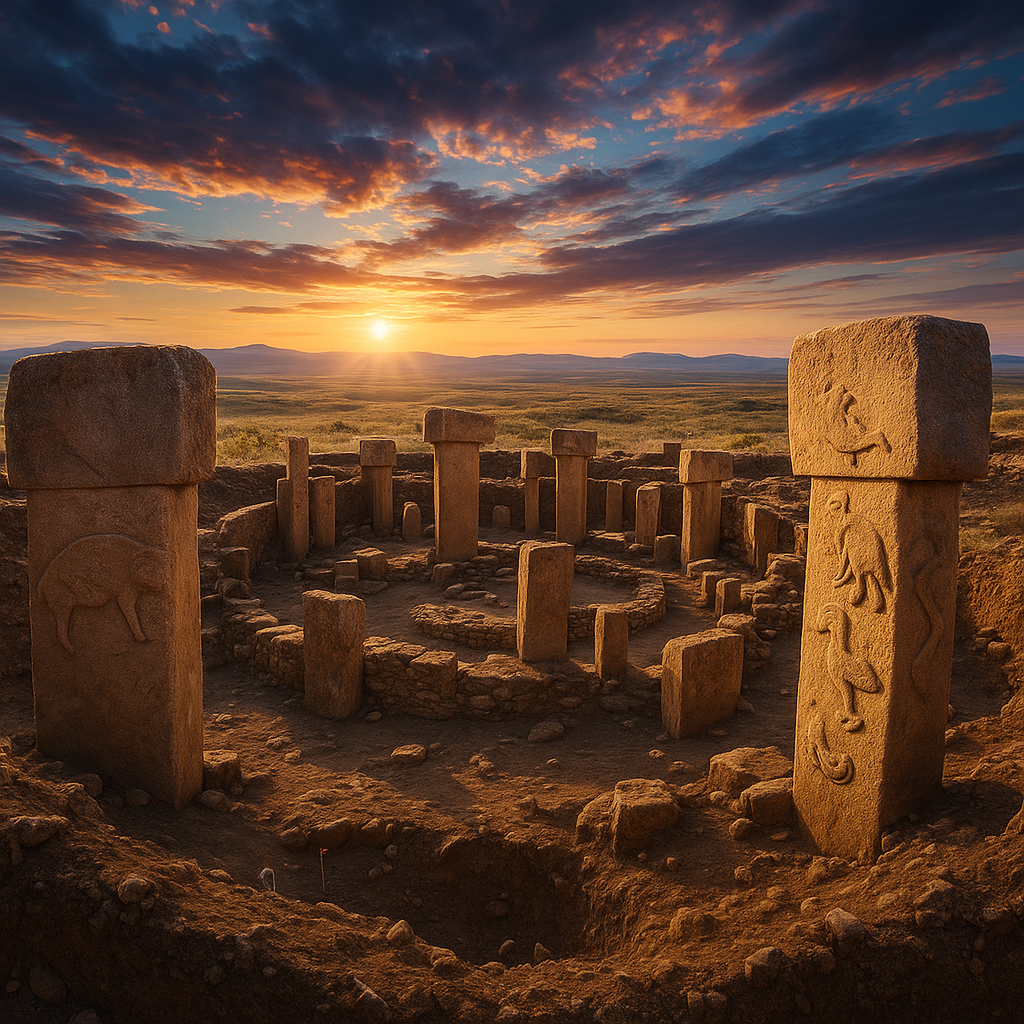
Göbekli Tepe stands as one of the most profound archaeological discoveries, a complex of massive stone enclosures in southeastern Turkey dating back to approximately 9600 BCE. Constructed by prehistoric hunter-gatherers, these T-shaped pillars arranged in circles challenge traditional views of human development. The site has reshaped our understanding of how religion and monumental architecture preceded agriculture and settled life.
Discovery and Construction Timeline
Göbekli Tepe was first noted in 1963 during a Turkish-American survey but gained prominence in 1994 when German archaeologist Klaus Schmidt began systematic excavations. Radiocarbon dating places the earliest structures around 9600 BCE, during the Pre-Pottery Neolithic A (PPNA) period, with use continuing until about 8200 BCE in the Pre-Pottery Neolithic B (PPNB). This makes it over 11,000 years old, predating Stonehenge by 6,000 years and the Egyptian pyramids by 7,000 years. Construction involved quarrying and erecting pillars weighing up to 20 tons each, feats achieved without metal tools or wheels.
PPNA Phase (9600-8800 BCE):** Initial circular enclosures with tallest pillars.
PPNB Phase (8800-8200 BCE):** Smaller enclosures and evidence of feasting.
Abandonment: Intentionally buried around 8000 BCE, preserving the site.
Architectural Marvels and Symbolism
The site features at least 20 circular enclosures, each about 10-30 meters in diameter, ringed by T-shaped limestone pillars up to 5.5 meters high. These pillars are adorned with intricate carvings of animals like foxes, snakes, boars, and birds, as well as abstract symbols and human-like figures. Enclosures likely served as temples or ritual spaces, evidenced by lack of domestic remains—no hearths or trash pits indicate permanent habitation.
Revolutionary Impact on Human History
Göbekli Tepe upended the long-held theory that agriculture sparked complex societies and religion. Instead, it suggests monumental architecture and communal rituals drove hunter-gatherers to organize large groups, possibly leading to the Neolithic Revolution—the shift to farming. Schmidt proposed that the need to feed workers at communal feasts encouraged plant domestication nearby. This flips the narrative: religion may have birthed civilization, not vice versa.
Challenging Linear Progress:** Complex societies existed before farming.
Social Organization:** Required hundreds of people, hinting at early hierarchies.
Cultural Influence:** Similar pillars found at nearby sites like Karahan Tepe.
Real-World Examples and Ongoing Research
Comparisons include Jericho's tower (c. 9000 BCE), a simpler structure, and Çatalhöyük (7500 BCE), an early farming village. Excavations continue, with UNESCO designating it a World Heritage Site in 2018. Recent finds include domestic structures, suggesting gradual sedentism. Examples of its influence: inspires reevaluation of sites like Gunung Padang in Indonesia.
Legacy and Future Implications
Göbekli Tepe proves early humans were capable of sophistication rivaling later civilizations. It prompts questions about lost knowledge and the roots of spirituality. As digs progress, it may reveal more about humanity's first steps toward modernity, emphasizing cooperation over isolation in prehistory.