Who Was Mustafa Kemal Atatürk and His Role in Founding Turkey?
Discover Mustafa Kemal Atatürk, the founder of the Republic of Turkey. Learn about his military leadership in the Turkish War of Independence and key reforms that shaped modern Turkey. A pivotal figure in 20th-century history.
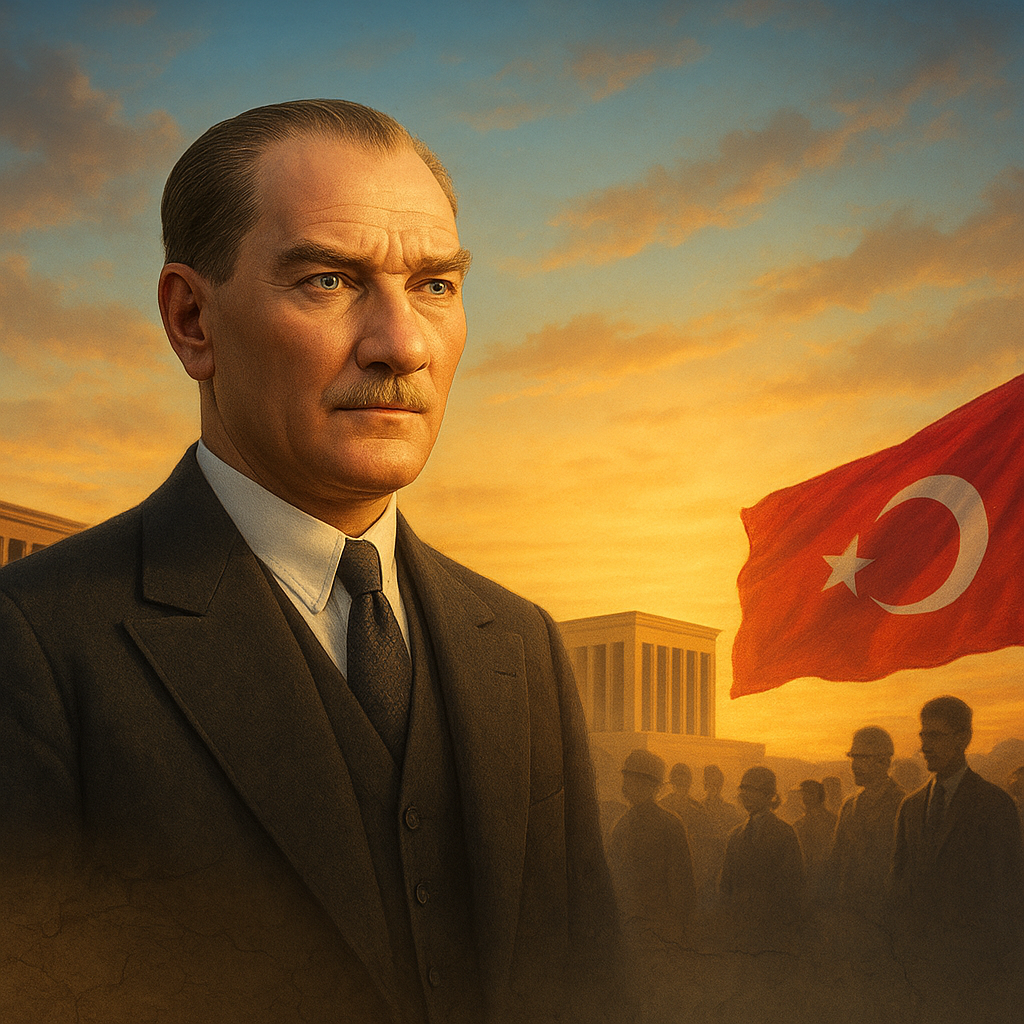
Mustafa Kemal Atatürk (1881–1938) was a Turkish military officer, revolutionary, and statesman who founded the Republic of Turkey in 1923. Revered as the father of the Turks, he led the Turkish War of Independence against Allied occupation after World War I. His visionary leadership transformed the Ottoman Empire's remnants into a modern, secular nation-state.
Early Life and Military Career
Born on May 19, 1881, in Thessaloniki (then part of the Ottoman Empire), Mustafa Kemal received his early education in a military high school. He excelled in the Ottoman Military Academy and War College, graduating in 1905. His early career involved suppressing rebellions and participating in the Young Turk Revolution of 1908, which aimed to modernize the empire.
During World War I, Atatürk gained fame for his defense at Gallipoli in 1915. Commanding the 19th Division, he repelled Allied landings, earning the nickname 'Saviour of Istanbul.' This victory solidified his reputation as a brilliant strategist.
Leadership in the Turkish War of Independence
After the Ottoman defeat in 1918, Allied powers occupied parts of Turkey under the Treaty of Sèvres. Atatürk rejected this and convened the Turkish National Movement in 1919, establishing the Grand National Assembly in Ankara as a rival government.
Battle of Sakarya (1921): Atatürk's forces halted Greek advances, boosting morale.
Great Offensive (1922): Decisive victory that expelled Greek troops from Anatolia.
Abolition of the Sultanate (1922): Ended Ottoman rule, paving the way for republicanism.
The Treaty of Lausanne (1923) replaced Sèvres, securing Turkey's modern borders and sovereignty.
Founding the Republic of Turkey and Key Reforms
On October 29, 1923, Atatürk proclaimed the Republic of Turkey, becoming its first president. He implemented sweeping Kemalist reforms to secularize and modernize society, including adopting the Latin alphabet, granting women suffrage in 1934, and promoting industrialization.
Secularism: Separation of religion and state, closing religious courts.
Education Reform: Nationwide literacy campaigns and compulsory schooling.
Westernization: Adoption of European dress codes, calendar, and legal systems.
These changes, known as the Six Arrows of Kemalism (republicanism, nationalism, populism, statism, secularism, revolutionism), formed Turkey's ideological foundation.
Legacy and Global Impact
Atatürk died on November 10, 1938, from cirrhosis, but his legacy endures. Turkey observes his principles in its constitution, and his mausoleum, Anıtkabir, is a national shrine. Internationally, he inspired anti-colonial leaders like Jawaharlal Nehru in India.
Examples of Influence: Vietnam's Ho Chi Minh studied Atatürk's independence strategies.
Modern Turkey: His vision guides ongoing debates on secularism and democracy.
Conclusion
Mustafa Kemal Atatürk's role in founding the Republic of Turkey marked the end of centuries of imperial rule and the birth of a sovereign nation. His reforms laid the groundwork for Turkey's emergence as a key Middle Eastern power. Today, he remains a symbol of resilience and progress.