What is DNA? Structure, Function and Importance
Discover what DNA is: the blueprint of life. Learn about its double helix structure, how it stores genetic information, replication process, and real-world applications in medicine and forensics. Essential guide for beginners.
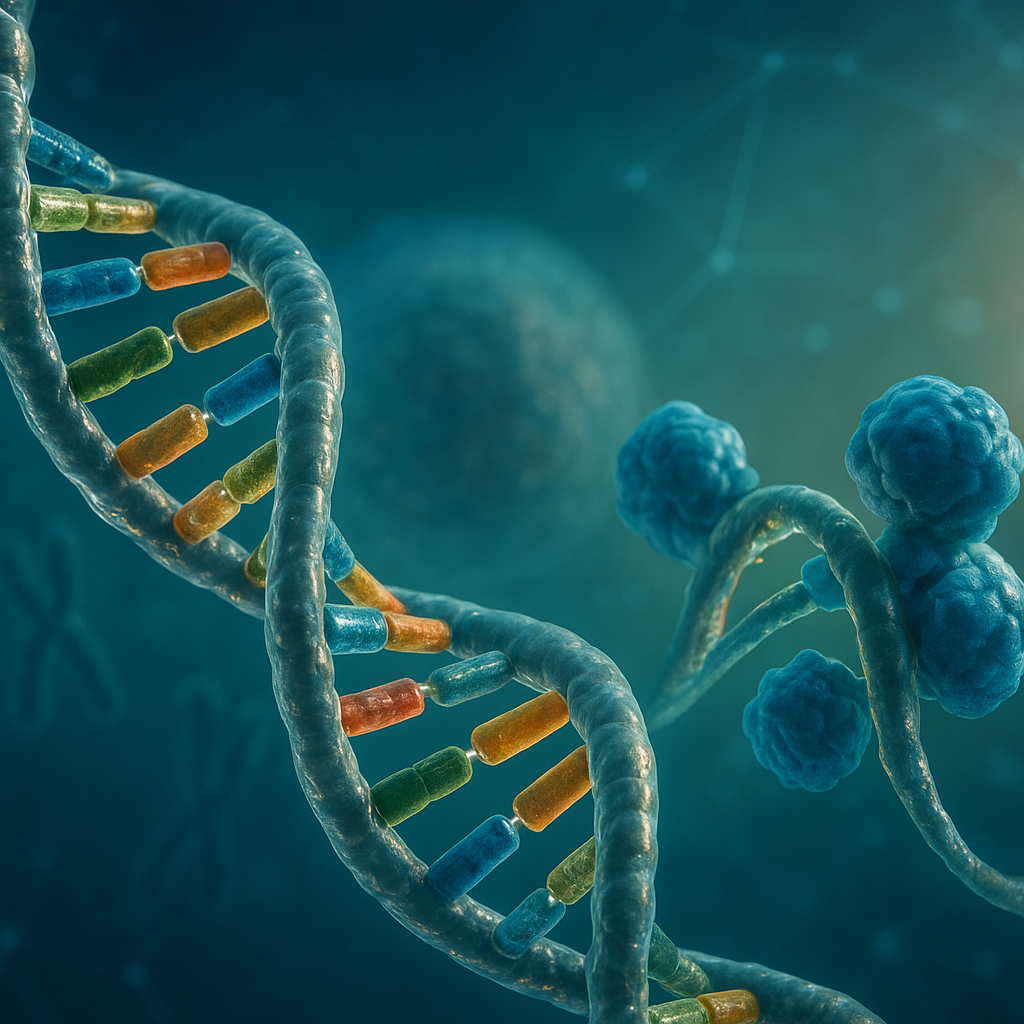
DNA, or deoxyribonucleic acid, is the fundamental molecule that carries the genetic instructions used in the growth, development, functioning, and reproduction of all known living organisms. Often called the 'blueprint of life,' it determines traits like eye color and height. This molecule's elegant structure enables it to store vast amounts of information in every cell of our bodies.
Discovery of DNA
The story of DNA begins in the early 20th century. In 1869, Swiss biochemist Friedrich Miescher first isolated DNA from white blood cells in pus-soaked bandages. However, its true significance emerged in 1953 when James Watson and Francis Crick, along with Rosalind Franklin and Maurice Wilkins, elucidated its double helix structure using X-ray crystallography data. This breakthrough earned Watson, Crick, and Wilkins the Nobel Prize in 1962.
Miescher's isolation: First evidence of a new substance in cell nuclei.
Avery-MacLeod-McCarty experiment (1944): Proved DNA, not proteins, carries genetic information.
Franklin's Photo 51: Iconic X-ray image revealing DNA's helical form.
Structure of DNA
DNA's double helix resembles a twisted ladder. It consists of two long strands made of sugar (deoxyribose) and phosphate molecules forming the backbone, connected by pairs of nitrogenous bases: adenine (A) with thymine (T), and guanine (G) with cytosine (C). These base pairs hold the strands together via hydrogen bonds. The helix measures about 2 nanometers wide and can stretch up to 2 meters in a single human cell if uncoiled.
Function of DNA
DNA encodes instructions for proteins, the building blocks of life, through its genetic code. Genes, segments of DNA, direct the synthesis of proteins via transcription (to mRNA) and translation (at ribosomes). Mutations in DNA can lead to variations or diseases, highlighting its role in heredity. In humans, DNA comprises about 3 billion base pairs across 23 chromosome pairs.
Trait inheritance: Determines physical characteristics passed from parents.
Cellular processes: Guides cell division and metabolism.
Evolution: Variations drive natural selection, as seen in antibiotic-resistant bacteria.
DNA Replication and Real-World Examples
During cell division, DNA replication ensures each new cell gets an identical copy. Enzymes like DNA polymerase unwind the helix, and each strand serves as a template for a new complementary strand, with remarkable accuracy (one error per billion bases). Real-world applications include PCR for amplifying DNA in forensics, solving cases like the Golden State Killer identification in 2018.
CRISPR gene editing: Used to treat genetic disorders like sickle cell anemia.
DNA fingerprinting: Essential in paternity tests and crime scene analysis.
COVID-19 vaccines: mRNA vaccines instruct cells to produce viral proteins based on DNA-derived sequences.
Importance in Modern Science
Today, DNA sequencing technologies like those from the Human Genome Project (completed in 2003) have mapped entire genomes affordably. This fuels advancements in personalized medicine, agriculture (GMO crops), and ancestry tracing via services like 23andMe. Understanding DNA continues to unlock mysteries of life and disease.
Conclusion
DNA remains the cornerstone of biology, bridging chemistry and heredity. Its discovery transformed science, and ongoing research promises revolutionary therapies. Exploring your own genetic code starts with appreciating this molecular marvel.